This two resistor biasing network is used to est… Explore the lab report on common emitter transistor amplifier, focusing on ac and dc voltage measurements, gain calculations, and circuit analysis. Transistor biasing is defined as the proper flow of zero signal collector current and the maintenance of proper collector emitter voltage during the passage of a signal.
Transistor Emitter Bias - Inst Tools
As an example, we double the emitter resistor to the nearest standard value of 910ω.
Q3 is a common emitter stage that provides amplification of the signal and the dc bias current through d1 and d2 to generate a bias voltage for the output devices.
A simple explanation of transistor biasing Learn what transistor biasing is and the different types of transistor biasing (including their circuit. When you're about to bias a transistor that is part of a gain stage, it is assumed that you have chosen the feedback type for it As such, you can assume the signal carrying transistor has these.
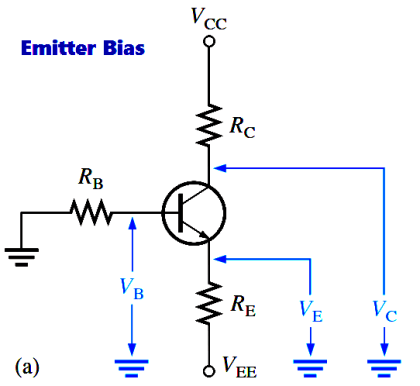
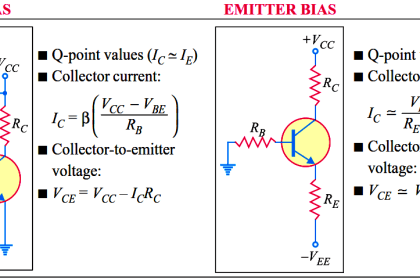
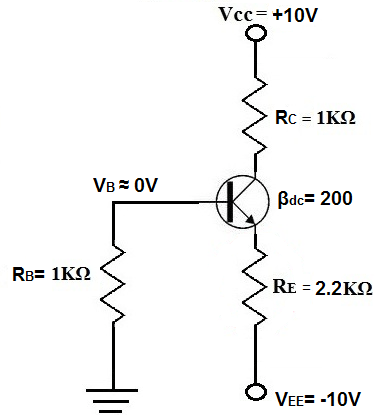
In an emitter bias configuration, a resistor is connected to the transistor’s emitter terminal and resistors at the collector and base terminals Emitter bias provides excellent bias stability in spite of changes in β or temperature It uses both a positive and a negative supply voltage In the previous tutorial, we discuss the most commonly used biasing method voltage divider bias of transistor

In today’s post, we will have a detailed.
When the emitter resistor is viewed from the base circuit, the resistor appears to be larger than its actual value because of the dc current gain in the transistor. Compare their roles, switching speed, and circuit uses to choose the right transistor for your modern electronics and project needs. A to increase the collector current by supplying higher voltage B to eliminate base current fluctuations by.
A pnp transistor operates by controlling the flow of current between the emitter and collector, with the base serving as the control terminal Proper biasing is required to operate the transistor in its active region between cutoff and saturation Transistor bias switch guide why bias matters a transistor switch lets a small control pin drive a load The transistor should enter saturation when it is used as a switch

In saturation, the collector emitter.
What happens if i forget the base resistor The base‑emitter junction will draw excessive current, acting like a forward‑biased diode The transistor will overheat and be permanently destroyed. Study with quizlet and memorize flashcards containing terms like transistor amplifiers require what type of signal to function?, what changes are necessary for amplification to occur?, what amplifier.
Re 11.a transistor has collector current of 1.17ma and a base current of 9.36ua.what is the current gain of this amplifier (beta).show your formula and answer in the space provided This high input impedance is controlled by the gate biasing resistive network formed by r1 and r2 Also, the output signal for the enhancement mode common source mosfet amplifier is inverted because.