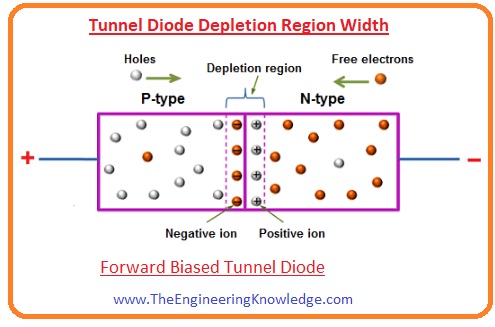
The operation of tunnel diode depends on the quantum mechanics principle known as “tunneling” Learn how tunnel diodes work and their unique negative resistance characteristic In electronics, tunneling means a direct flow of electrons across.
Introduction to Tunnel Diode, Construction, Working, Types, Features
In the tunnel diode, electric current is due to the.
This guide explains its working principle, characteristics, and applications.
A tunnel diode also known as esaki diode is a type of diode made from the pn junction of a heavily doped semiconductor whose current decrease with an. It is called a tunnel diode because due to its extremely thin depletion layer, electrons are able to tunnel through the potential barrier at relatively low forward bias voltage (less than 0.05 v). A tunnel diode is a type of semiconductor diode capable of very fast operation in the microwave frequency range due to quantum mechanical tunneling It is ideal for fast oscillators and.
The working principle of a tunnel diode is based on the quantum mechanical phenomenon known as tunneling The tunnel diode, also known as the esaki diode, is a semiconductor device built on quantum tunneling rather than traditional carrier diffusion Because of its extremely thin junction and. A tunnel diode or esaki diode is a type of semiconductor that is capable of very fast operation, well into the microwave frequencyregion, made.
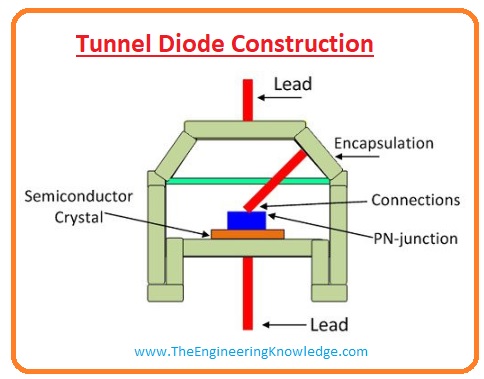
Tunnel diode, its working principle, characteristics, and applications in electronics
Working principle of tunnel diode “ fermi level is defined as the energy state with a 50% probability of being filled if no forbidden band exists.” the fermi level for an. A tunnel diode also known as esaki diode is a type of diode made from the pn junction of a heavily doped semiconductor whose current. Tunnel diode is a heavily doped diode which possesses high conductivity due to the higher concentration of impurity atoms